
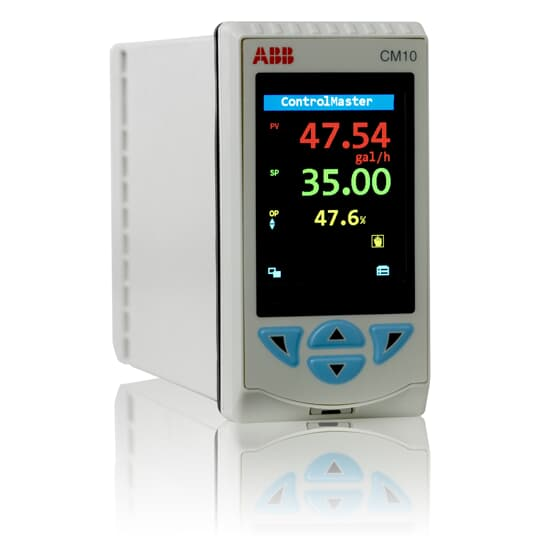
CM10
1/8 DIN panel-mounted universal controller. Compact control for ON/OFF, time-proportioning, analogue PID and motorised valves. Ethernet and MODBUS available.
A shared platform for local control of temperature, pressure, flow, level, pH and other variables. Models mainly differ in size, I/O and control strategy capabilities.
1/8 DIN panel-mounted universal controller. Compact control for ON/OFF, time-proportioning, analogue PID and motorised valves. Ethernet and MODBUS available.
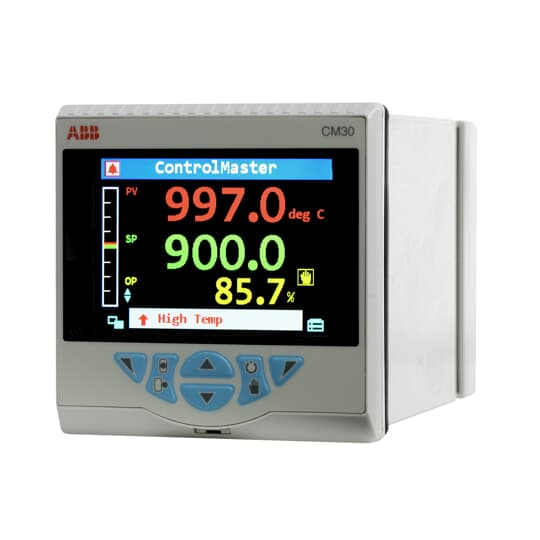
1/4 DIN panel-mounted universal controller. Scalable single/dual functions, cascade, profiling, maths and logic for more complex applications. Often the standard choice for Commander C-series retrofits.
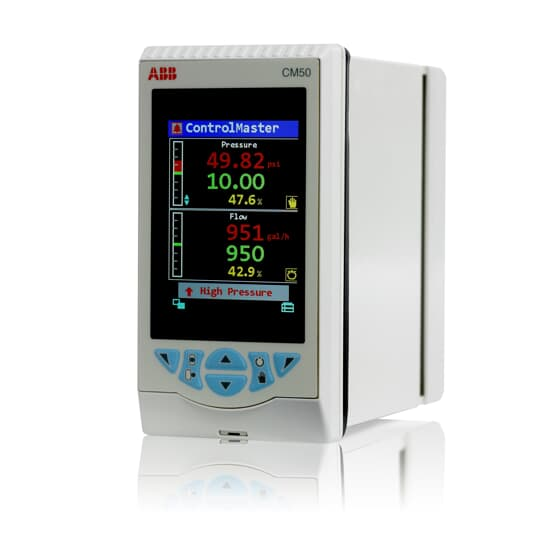
1/2 DIN panel controller with a 3.5-inch display, dual loops and strategies such as cascade, feed-forward, ratio, predictive and adaptive control, plus maths, logic and totalisation.
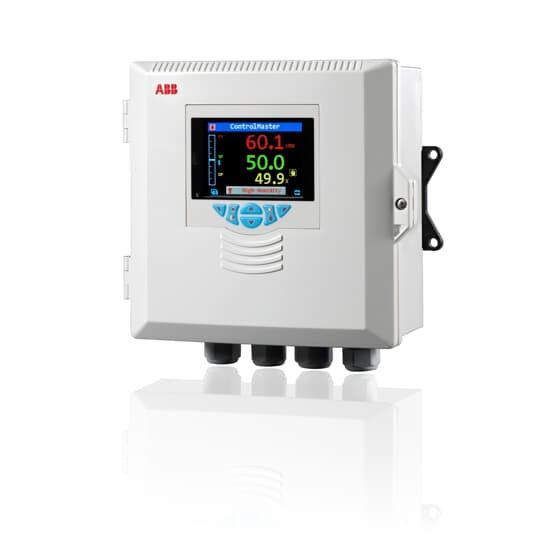
Wall- or pipe-mounted field controller, fully rated IP66/NEMA 4X. Extended and dual-loop functionality, with up to four control/retransmission outputs and six relays depending on configuration.
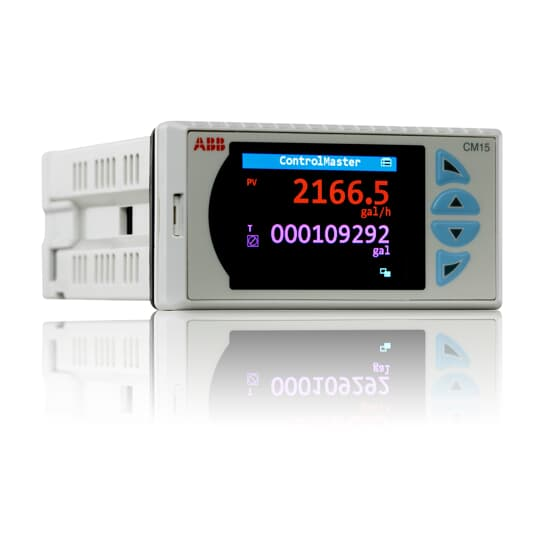
1/8 DIN universal indicator with thermocouple, RTD, mA, V, mV and frequency inputs, totalisation, level, maths, logic, counters, alarms and Ethernet/MODBUS.
| Function | CM10 | CM30 | CM50 | CMF310 |
|---|---|---|---|---|
| Standard PID loop | Strong capability | Strong capability | Strong capability | Strong capability |
| Dual-loop / extended functions | Limited | Yes | Yes | Yes |
| Cascade / ratio / feed-forward | Basic applications | Available | Available | Available |
| Profiles / ramp-soak | Configuration-dependent | Strong capability | Available | Available |
| Ethernet / MODBUS | Yes | Yes | Yes | Yes |
| Field installation | IP66 front panel | IP66 front panel | IP66 front panel | Entire enclosure IP66 |
Before tuning, check range, linearisation, engineering units and sensor-failure behaviour.
4–20 mA, time-proportioning, relay and motorised-valve outputs require different logic and timing.
The process must be sufficiently stable, and the test must be able to change the output safely.
Manage output saturation and automatic/manual transfer to avoid large overshoots on return to control.
Excessive filtering slows the loop. Noise and unstable sensors should not be addressed through tuning alone.
Stiction, deadband and an oversized control valve limit control more than any PID parameter.
Download the documents for your model. Shared manuals, protocols and versions are identified in each document card.
Select the basic or standard functions manual according to the controller configuration.
Separate manuals for basic, standard and extended / dual-loop functions.
Available functions depend on the purchased configuration.
Field-mounted controller: extended-functions operating manual and installation/commissioning instructions.
Universal indicator. The shared CM15 / CMF160 manual covers indicators, not PID controllers.
CM10 is the most compact and suits standard loops. CM30 adds more I/O and cascade or profile functions. CM50 suits dual-loop control and more complex strategies.
When the controller must be installed directly in the field without a dedicated cabinet. It is fully IP66/NEMA 4X and can be wall- or pipe-mounted.
CM15 is an indicator, not a PID controller. It supports alarms, totalisation, maths, logic and communications. Use CM10/30/50/CMF310 for PID control.
It estimates initial PID parameters. It provides a starting point; final tuning must be checked against actual process dynamics and valve limits.
When a slow primary variable can be controlled better through a faster secondary loop, such as temperature with an inner steam-flow loop.
When a measurable disturbance affects the process and can be compensated before a setpoint error develops.
Standalone controllers suit a few local loops, retrofits and operational independence. PLC/DCS suits extensive logic, coordinated loops, historians and central management.