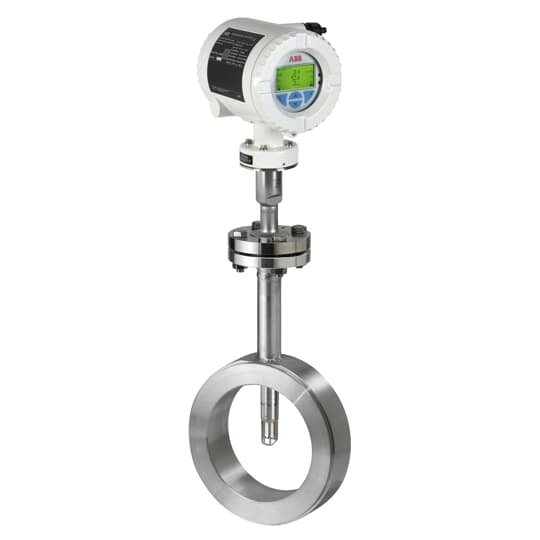
For dry gases and compressed air, especially where low-flow sensitivity and energy monitoring matter. Mass flow is derived from heat transfer and depends on gas properties.
Dry gasThermal mass meters perform best with clean, dry gases. Condensation, aerosols and coatings alter heat transfer at the probe.
Gas compositionSignificant composition changes affect specific heat and thermal conductivity. Use the correct profile or calibration; for variable applications, consider FMT450 functions.
When we recommend it
Compressed air and energy monitoring.
Nitrogen, oxygen, argon and compatible industrial gases.
Biogas or process gases with known, manageable composition.
Leak monitoring and low flow rates.
Mass flow measurement without external pressure or temperature sensors.
When to assess alternatives
Steam and gases with significant condensation.
Very dirty gases or probe coatings.
Changing composition without the ability to update the gas profile.
Severely distorted flow profiles with no straight runs available.
Applications requiring fluid density measurement: consider Coriolis.
Correct insertionProbe depth and orientation must place the sensor at the specified point in the velocity profile.Straight runsElbows, valves, reducers and compressors alter the profile. Observe straight-run requirements or use a flow conditioner where specified.Gas dataProvide the actual composition, pressure and temperature. Air is not equivalent to every gas mixture.CondensationAvoid locations where liquid can collect on the probe, making thermal measurement unstable or incorrect.CoatingAllow access for cleaning if the gas can foul the sensor.RangeHigh low-flow sensitivity does not remove the need to size correctly for minimum and maximum flow and velocity.
Other ABB models we support: FMT700, FMT091, FMT092 and FMT094 are among the installed instruments and product families Geyser IC can support. Availability and documentation are checked against the specific code.
ABB documentation · Flow
ABB datasheets and manuals
Download model-specific PDFs with language and revision details. Shared manuals and commissioning instructions are identified in the document cards.
FMT230 / FMT250
Shared datasheet and manual for the compact SensyMaster family.
The more details you provide, the sooner we can select the right technology and nominal size.
Technical FAQ
Frequently asked questions
When should I choose a thermal mass meter?
For dry gases, compressed air, nitrogen, biogas and industrial gases, particularly for low flow rates, consumption monitoring and mass flow without external compensation.
Why does gas composition matter?
The principle relies on gas thermal properties. Changing composition without changing the profile or calibration introduces error.
FMT230/250 or FMT430/450?
230/250 are compact platforms; 430/450 form the process family. FMT450 adds advanced functions, including multiple gas profiles depending on configuration.
Does it work with wet gas?
Condensation, aerosols and sensor deposits can degrade measurement. For steam or very wet gases, Vortex, Swirl or another technology is often considered.
How important are straight runs?
Very important. The sensor measures velocity and heat transfer locally; a profile distorted by elbows, valves or reducers can cause errors.
Is it suitable for compressed air?
Yes. This is a typical application for energy monitoring, leak detection and consumption allocation.