
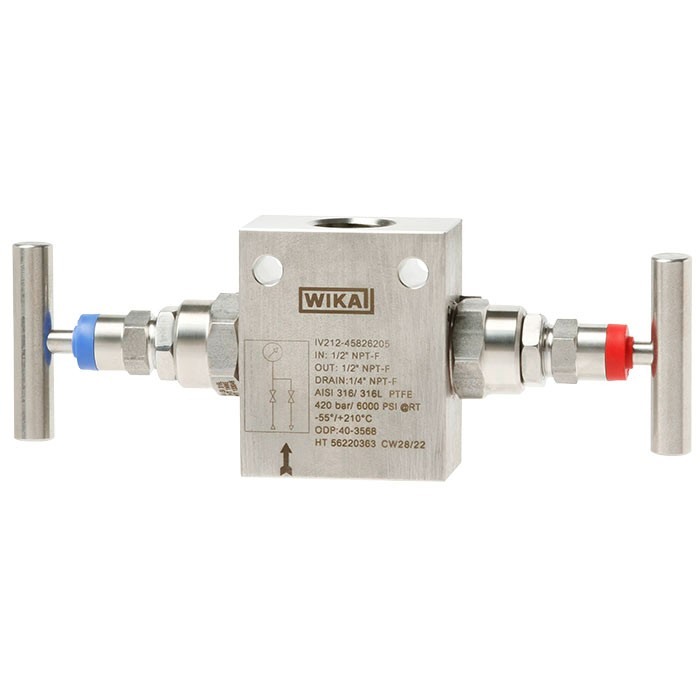
2-valve manifolds
Isolation and venting or testing for gauge and absolute pressure instruments.
The right accessory affects safety, maintenance, measurement stability and instrument life. Geyser IC supports selection of manifolds, valves, siphons, condensate pots, dampers, fittings and other installation components.
Isolation and venting or testing for gauge and absolute pressure instruments.
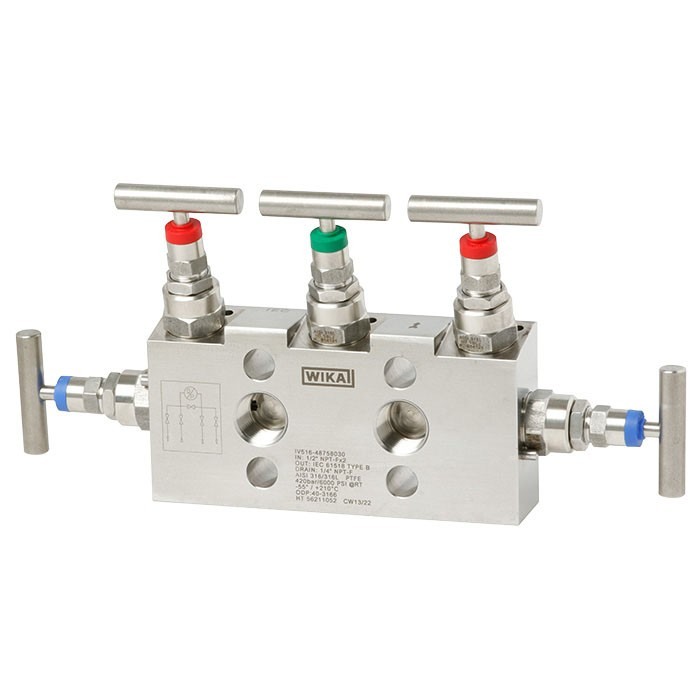
Isolation, equalisation, testing and purging for differential pressure transmitters.
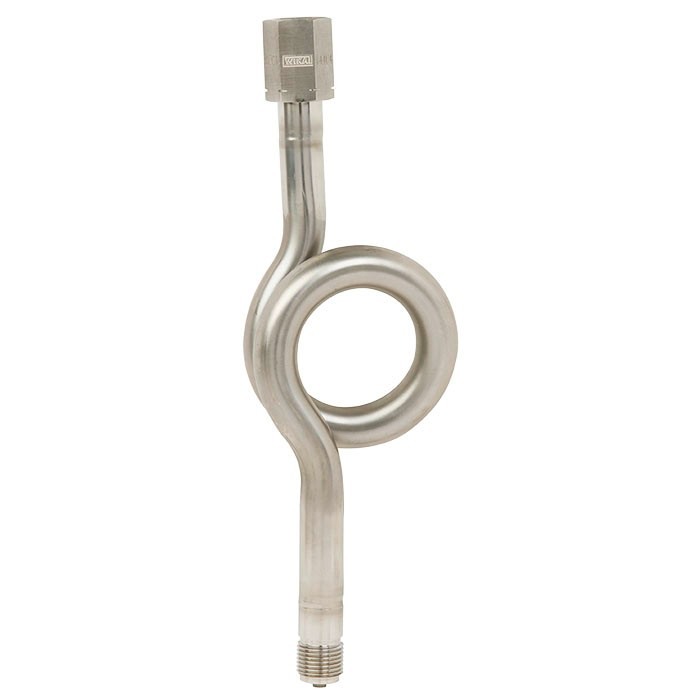
Thermal protection for instruments in steam and hot-fluid applications.
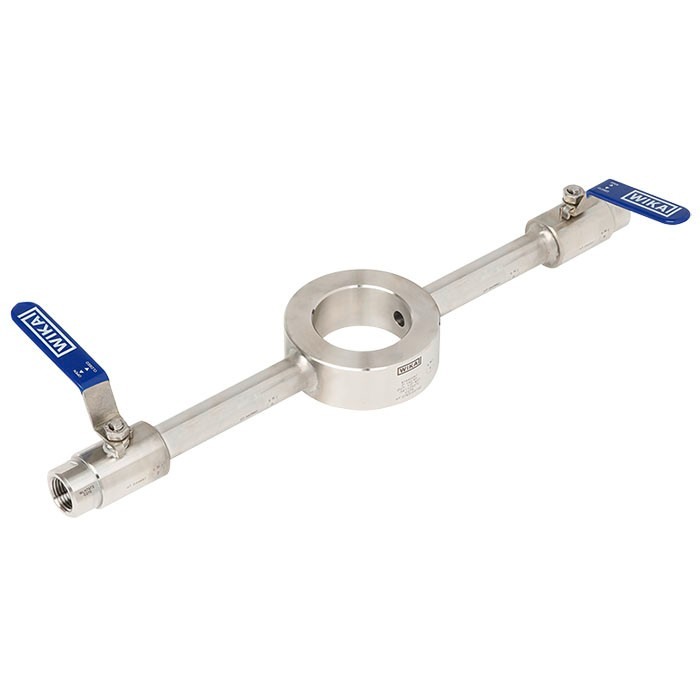
Installed between the diaphragm seal and process connection to facilitate flushing, purging and cleaning without removing the instrument.
For transmitter isolation, venting, equalisation and testing. The right manifold depends on instrument type and maintenance strategy.
Isolation and service valves for gauges, switches and transmitters. Selection considers pressure, temperature, fluids, materials and connections.
Protect mechanical instruments from high temperatures, particularly in steam service. A siphon creates a thermal barrier using condensate.
Primarily used in steam impulse lines to stabilise condensate columns and improve measurement repeatability.
For pulsating pressure, water hammer or process vibration. They help protect sensors and improve readability of mechanical instruments.
Installed between the diaphragm seal and process connection, they allow flushing, purging and cleaning without removing the instrument.
Reducers, nipples, threaded adapters, compression fittings and components connecting the instrument mechanically to the process.
| Instrument | Common accessories | Main consideration |
|---|---|---|
| Pressure gauge | Gauge valve, siphon, damper, cooling element | Vibration, pulsation and fluid temperature |
| Pressure switch | Root valve, siphon, snubber, fittings | Sensor protection and setpoint access |
| Gauge / absolute pressure transmitter | 2-valve manifold, root valve, fittings | Safe isolation and ease of maintenance |
| Differential pressure transmitter | 3- or 5-valve manifold, condensate pots, impulse lines | Equalisation, drainage, venting and installation symmetry |
We normally consider a siphon or cooling element to prevent direct exposure of the instrument to pipe temperature.
A 3- or 5-valve manifold simplifies isolation, equalisation and maintenance of the differential pressure transmitter.
A snubber or damper can improve stability and service life, especially for mechanical instruments.
Diaphragm seals have a dedicated page because seal, capillary and fill-fluid selection directly affects instrument performance.
Explore transmitters with diaphragm sealsSend a P&ID, installation photograph or measurement-point description so we can configure a consistent instrument and accessory package.
If the accessory is associated with a specific instrument, identify it in the form.
It is normally used with gauge or absolute pressure instruments for isolation and venting or testing. Differential pressure transmitters more commonly use 3- or 5-valve manifolds.
It isolates and equalises a differential pressure transmitter. A 5-valve version also permits testing or purging on both sides.
Mainly with steam or hot fluids to protect gauges and switches by creating a condensate column that reduces the temperature at the instrument.
A condensate pot is used in differential measurements on steam or hot gases to stabilise condensate columns in the impulse lines.
It is useful for pulsating or shock pressure, protecting gauges and switches and improving reading stability.
They are important process accessories, but have a dedicated Geyser page because the seal directly affects instrument sizing.
At minimum, we need instrument type, fluid, pressure, temperature, connections, required function and installation conditions.
For M26 manifolds used with ABB transmitters: check configuration and connection compatibility.
M26 · Datasheet PDF EN