
S26 · ABB diaphragm seals
ABB combines technical data, dimensions, fill-fluid selection and instructions in one PDF.
Diaphragm seal systems isolate the transmitter from the process fluid, supporting corrosive, viscous, dirty or hot fluids and level configurations requiring direct mounting or remote capillaries.
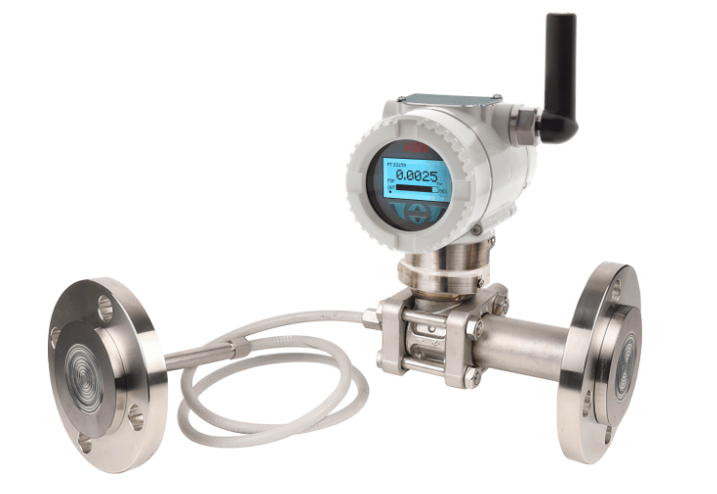
Seal type alone is not enough. Overall performance depends on the sensor, diaphragm diameter and stiffness, fill fluid, temperature, capillary and installation configuration.
Download PDFs for your model. IT or EN identifies the language. Select manuals to match the instrument's communication protocol.
ABB combines technical data, dimensions, fill-fluid selection and instructions in one PDF.
P-300/P-500 family manual and S26 documentation.
PGD500 and PDD500 datasheets on request. Contact us
Assess three aspects of the system, beyond the transmitter's nominal accuracy.
More fill fluid increases sensitivity to temperature changes and may lengthen system response time. Consider sunlight and temperature differences along the route during selection.
Availability depends on seal type and configuration. Listed temperatures are catalogue fluid values and do not replace a complete application assessment.
A standard choice for many industrial applications.
Silicone option for lower ambient or process temperatures, depending on configuration.
For high-temperature applications, subject to pressure and installation checks.
For very low-temperature applications.
Inert fluid listed in ABB's catalogue for oxygen service, where available.
FDA-approved options offered in dedicated food-application configurations.
For vacuum applications, ABB recommends an all-welded construction and installing the transmitter at least 30 cm below the lower seal connection. Fill fluid, maximum temperature and minimum pressure must be assessed together.
The S26 family includes a wide range of geometries and connections to suit the process.
Seals with an integral flange and flush or extended diaphragm.
Rotating-flange configurations for greater installation flexibility.
Compact versions installed between compatible flanges or process connections.
Threaded connections for applications and lines that do not require a flange.
Tri-Clamp, V-band and other hygienic configurations for food and pharmaceutical applications.
Dedicated configurations for particular material, geometry or process requirements.
A typical configuration connects the high-pressure side to the bottom of the tank and references the low-pressure side to atmosphere. A diaphragm seal can isolate the process side where required.
Closed tanks, or applications requiring both measurement points to be isolated from the process, can use two seals. Diaphragm, capillary and fill fluid should be symmetrical on both sides.
The platform depends on measurement type, performance level and seal configuration.
| Family | Description | Status |
|---|---|---|
| PGD100 / PAD100 | P-100 platforms with diaphragm seals, according to measurement type. | Available |
| PGD300 / PAD300 / PDD300 | P-300 industrial platforms with diaphragm seals. | Available |
| PGD500 / PDD500 | P-500 high-performance platforms with diaphragm seals. | Upcoming |
ABB PGD100ABB PAD100ABB PGD300ABB PAD300ABB PDD300ABB PGD500ABB PDD500
For applications requiring both multivariable functions and process isolation through remote seals.
266C family versions with remote diaphragm seals. Combine differential pressure, absolute pressure and temperature with mass flow and compensated-level functions.
266J family versions with remote diaphragm seals, combining differential pressure, absolute pressure and temperature measurement while leaving calculations to an external system.
The model alone is insufficient to migrate a sealed 266 configuration correctly. The full code, serial number or nameplate is needed to identify seal type, material, capillary, connection and fill fluid.
ABB 266HRHABB 266DRHABB 266NRHABB 266GRTABB 266MRTABB 266ART
Original documents for identifying installed versions. Check the full code and protocol on the nameplate.
264DC: differential/gauge; 264HC: gauge; 264NC: absolute. 2007 and 2003 editions.
264DR: differential; 264PR/HR: gauge; 264VR/NR: absolute. 2008 and 2006 editions.
621ES: differential, gauge and absolute. 624ES: gauge and absolute.
621ES: level, differential and gauge. 624ES: gauge and absolute.
Dedicated datasheet for the flanged variant of the 600T EN series.
1998 datasheet for identifying installed level measurement versions.
Hydrogen molecules can permeate the diaphragm and, over time, compromise measurement stability and reliability, particularly under demanding pressure and temperature conditions.
ABB offers H-Shield/H-Shield+ diaphragm coatings with high permeation resistance. Selection requires checks on hydrogen purity, temperature, pressure, seal material and transmitter configuration.
Nameplates and installation photographs are particularly useful for transmitters with diaphragm seals.
Where geometry and access permit, direct mounting reduces the variables introduced by the seal system. Overall performance still depends on sensor range, diaphragm diameter, fill fluid and thermal conditions.
Select a sensor with an upper range limit close to the application span, use the largest compatible diaphragm, keep the capillary as short as practical and choose a fill fluid suited to temperature and pressure conditions.
Fill-fluid expansion within the closed transmitter, capillary and seal volume can cause zero shift. Its magnitude also depends on diaphragm stiffness and actual installation conditions.
Yes. The delay depends on sensor range, number of seals, configuration, fill-fluid viscosity, temperature and capillary length.
The same diaphragm size, capillary length and fill fluid are recommended on both sides of the transmitter.
ABB recommends carefully assessing fill fluid, temperature and absolute pressure. For vacuum service it specifies an all-welded construction and the transmitter at least 30 cm below the lower seal connection.
Depending on configuration, options include standard, high-temperature and low-temperature silicones, inert fluids for oxygen service and approved fluids for food applications.
The S26 series includes fixed and rotating flanges, threaded connections, sanitary or aseptic designs, wafer seals and special configurations.
We need the full code, serial number or a nameplate photograph. The model alone does not identify the connection, material, capillary, fill fluid and other options.