
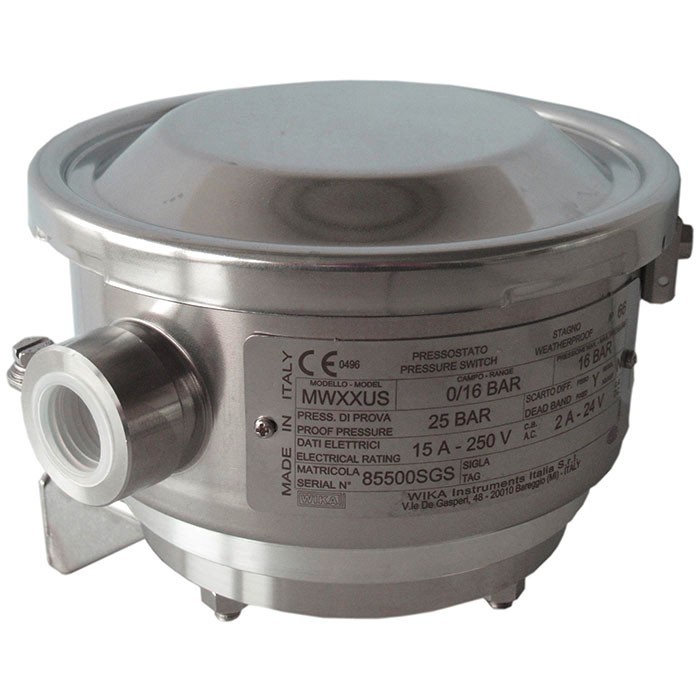
Gauge pressure
Bourdon
A Bourdon tube converts pressure into mechanical movement to operate the microswitch. A typical solution for medium to high and high pressure ranges.
Dedicated instruments for ON/OFF pressure control through one or more electrical contacts. Selection starts with setpoint, deadband, maximum pressure, contacts, materials and hazardous-area or functional-safety requirements.
A Bourdon tube converts pressure into mechanical movement to operate the microswitch. A typical solution for medium to high and high pressure ranges.
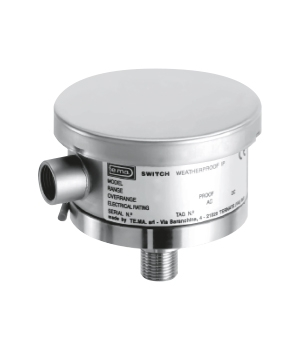
Diaphragm deflection operates the contact. Used across a wide pressure range, it may be preferred for sensitivity, robustness or specific wetted materials.
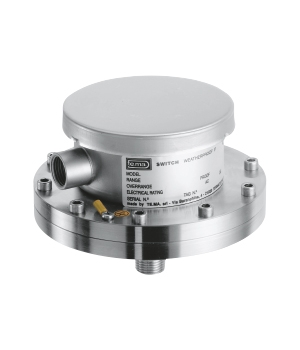
Suitable for low positive and negative pressures, especially in gases, HVAC, ventilation and filtration.
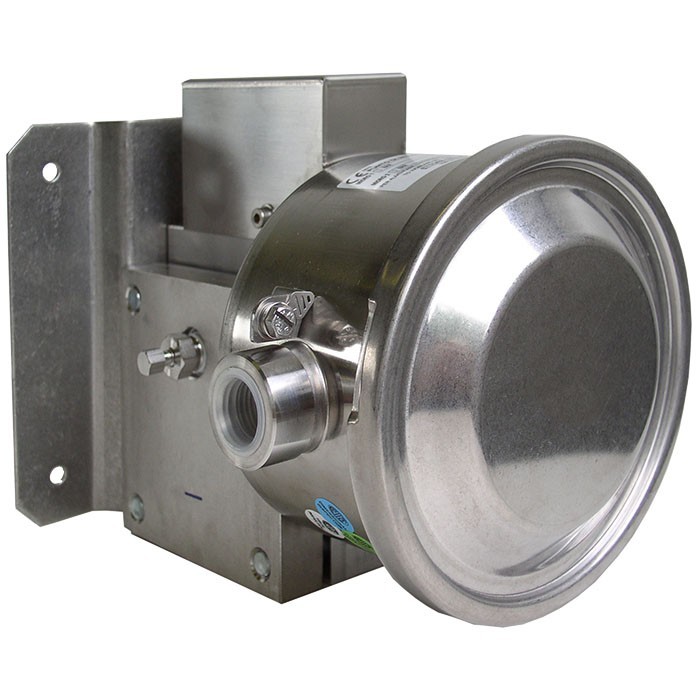
Compares two pressures and switches at the selected differential pressure. Typical applications include filter blockage, level, ventilation, pumps and heat exchangers.
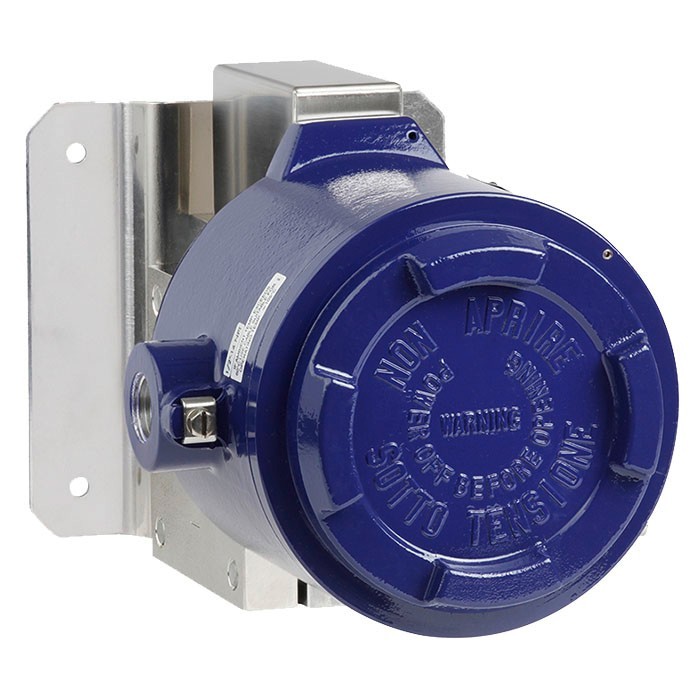
Operates relative to absolute vacuum, independently of atmospheric pressure changes. Useful for vacuum, gases, distillation and dedicated processes.
The pressure threshold that changes the contact state. The scale or setting range must allow stable adjustment in the required operating region.
After tripping, pressure normally needs to change by a certain amount before the contact returns to its original state. This differential prevents rapid switching around the threshold.
Certifications depend on manufacturer, series and configuration.
Mechanical pressure switches are available for potentially explosive atmospheres, depending on series and protection method.
International projects may require IECEx certification, sometimes combined with ATEX within the same family.
For safety functions, we select specifically suitable, certified configurations and check the required SIL level.
Its primary function is switching. Prefer it when a dedicated enclosure, reliable setpoint, switching capability, hazardous-area suitability or safety function is required.
Its primary function remains local indication, with one or more additional alarm or control contacts.
For safety or Ex applications, attach the customer specification if available.
A mechanical pressure switch changes a contact state at a threshold. A transmitter sends a continuous measurement to the control system.
The setpoint is the pressure at which the contact changes state. Deadband is the difference between trip and reset pressures.
Normally for medium to high and high pressure ranges, where Bourdon-tube deflection operates the microswitch.
It suits low to medium-high ranges and may offer greater sensitivity or compatibility with particular process conditions, depending on construction.
Mainly for low positive or negative pressures, typically in gases, HVAC, ventilation and filtration.
It operates when the pressure difference between two points reaches a threshold, for example for filter blockage, level, ventilation, pumps or heat exchangers.
Yes. Depending on manufacturer and series, ATEX and IECEx configurations are available, including Ex ia or Ex d versions, as well as switches suitable for SIL functional-safety applications. Certification must be verified for the specific configuration.
The mechanical sensing element needs no power to detect pressure. Its electrical contact is connected to the plant's specified control or power circuit.