
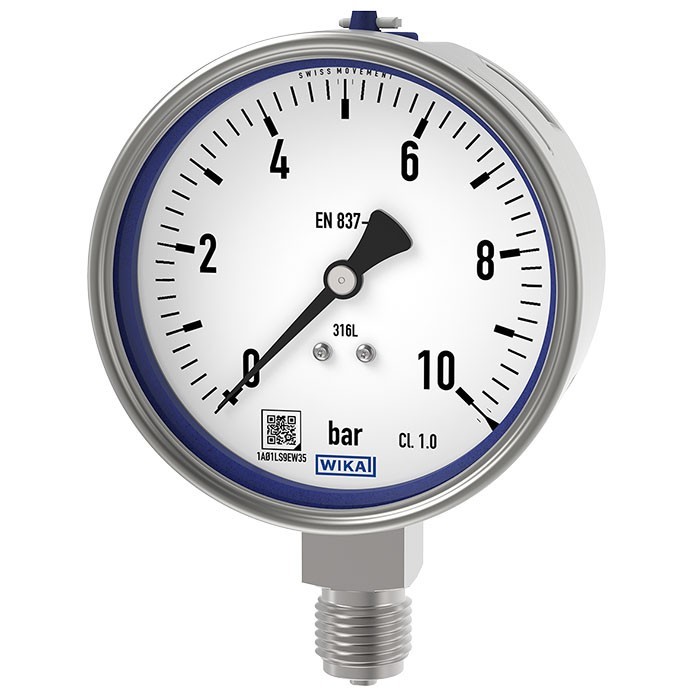
General purpose
Bourdon pressure gauges
The most common mechanical solution for medium and high gauge pressures in compatible liquids and gases. Suitable for pumps, compressors, pneumatic and hydraulic circuits, skids and process lines.
Mechanical instruments for local pressure readings without a power supply. We select the technology for the range, fluid, accuracy, materials, vibration and installation conditions.
The most common mechanical solution for medium and high gauge pressures in compatible liquids and gases. Suitable for pumps, compressors, pneumatic and hydraulic circuits, skids and process lines.
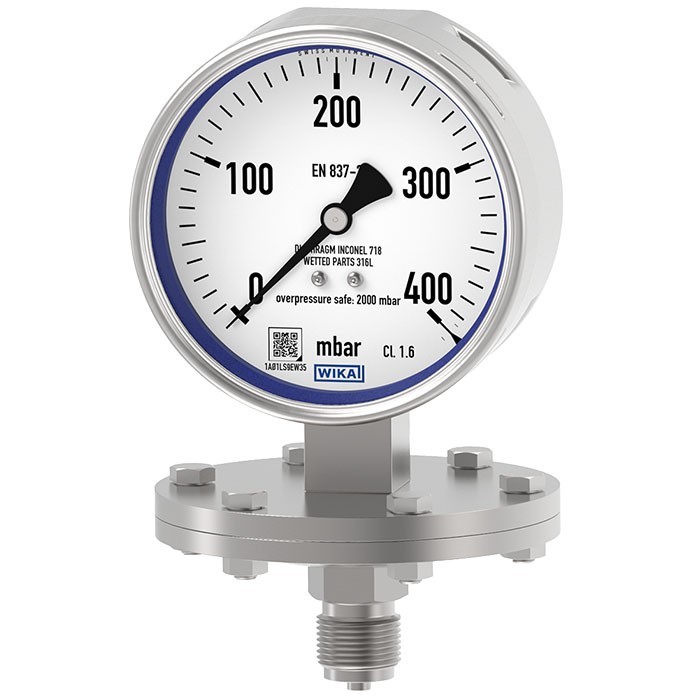
Suitable for low pressures, high overload capacity, and viscous, dirty, aggressive or particle-laden fluids, with materials and connections selected for the process.
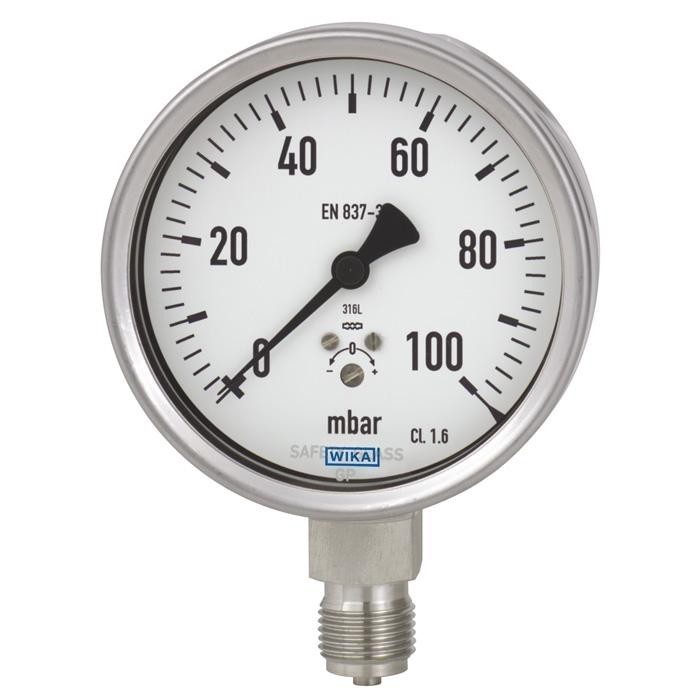
For low positive and negative pressures in dry, non-aggressive gases. Typical applications include HVAC, filtration, cleanrooms, laboratories and ventilation.
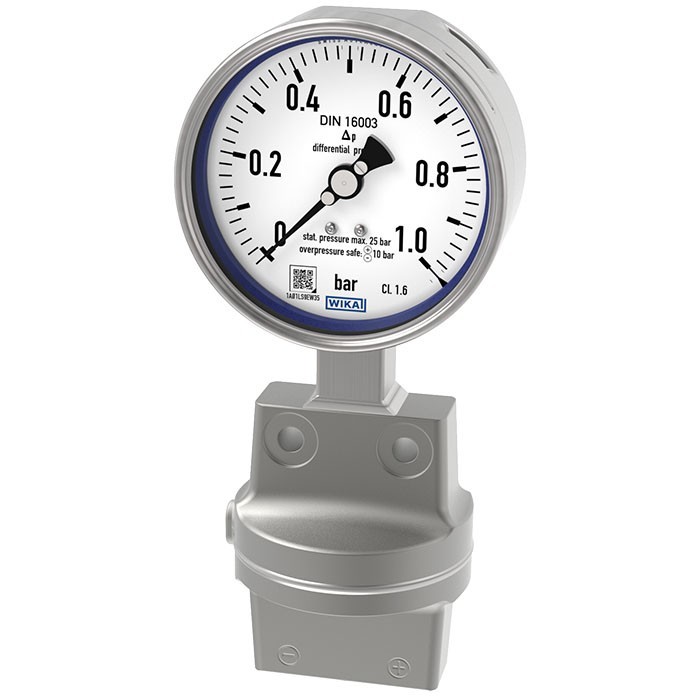
Measure the difference between two pressures for filters, fans, pumps, heat exchangers, level and flow applications.
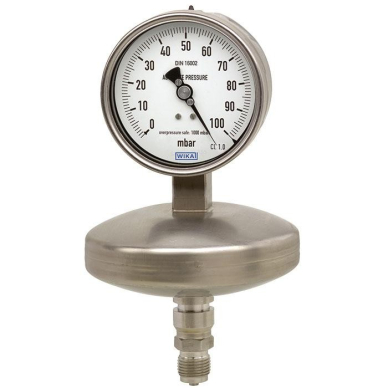
Measure relative to absolute vacuum, where atmospheric pressure changes must not affect the reading, such as vacuum processes and distillation.
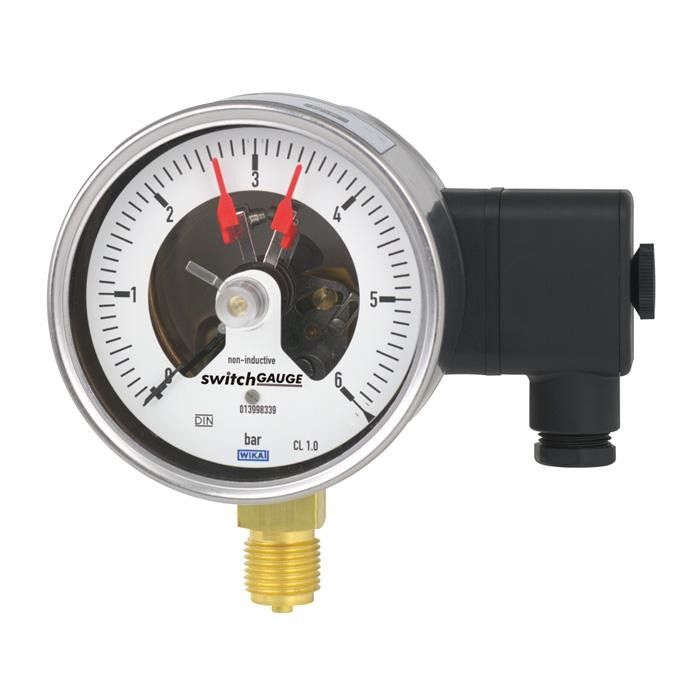
Combine local mechanical indication with one or more adjustable electrical contacts for alarms, permissives or control. Magnetic, inductive, reed or microswitch contacts may be available depending on the series.
| Technology | When we select it | Key advantage |
|---|---|---|
| Bourdon | General industrial applications and medium to high pressures. | Simplicity, robustness and wide availability. |
| Diaphragm | Low pressures, viscous, dirty or aggressive fluids, or high overload requirements. | Separation from the mechanism and greater overload resistance. |
| Capsule | Very low positive or negative pressures in dry gases. | High sensitivity to small pressure differences or values. |
For pumps, compressors and pulsating lines, we can assess liquid-filled cases, pulsation dampers or remote mounting to stabilise readings and protect the mechanism.
If fluid temperature exceeds instrument limits, protect the gauge with a siphon, cooling element or suitable remote configuration.
Explore accessories →Primarily a local indicator, it also switches a contact when pressure crosses an adjustable threshold.
Useful where operators need to see pressure and a simple alarm or control signal is also required.
Designed primarily for switching. Select it when the threshold, repeatability, enclosure or safety requirements are the priority.
Available certifications and contact types depend on manufacturer and series. For SIL safety functions, we normally assess a dedicated certified pressure switch.
The new instrument does not need to be the same brand.
Complete the information you know. We can define any missing details together.
It is the most common choice for medium and high gauge pressures in compatible liquids and gases, when simple, robust local indication is required.
Particularly for low pressures, high overload capacity or viscous, dirty, corrosive or particle-laden fluids, using suitable materials and connections.
Very low positive and negative pressures, especially with dry, non-aggressive gases, such as HVAC, filtration and cleanrooms.
To monitor the pressure difference between two points, such as filters, fans, pumps, heat exchangers, level or flow systems.
Gauge pressure uses atmospheric pressure as its reference. Absolute pressure is referenced to absolute vacuum and is therefore independent of barometric changes.
It combines local mechanical indication with one or more electrical contacts operating at set thresholds for alarms, permissives or control.
With vibration and pulsation, it damps pointer movement and improves readability and mechanism life.
Allow suitable margin above operating pressure, with more for pulsations or peaks. Then check accuracy, dial size, materials, connection and environmental conditions.