
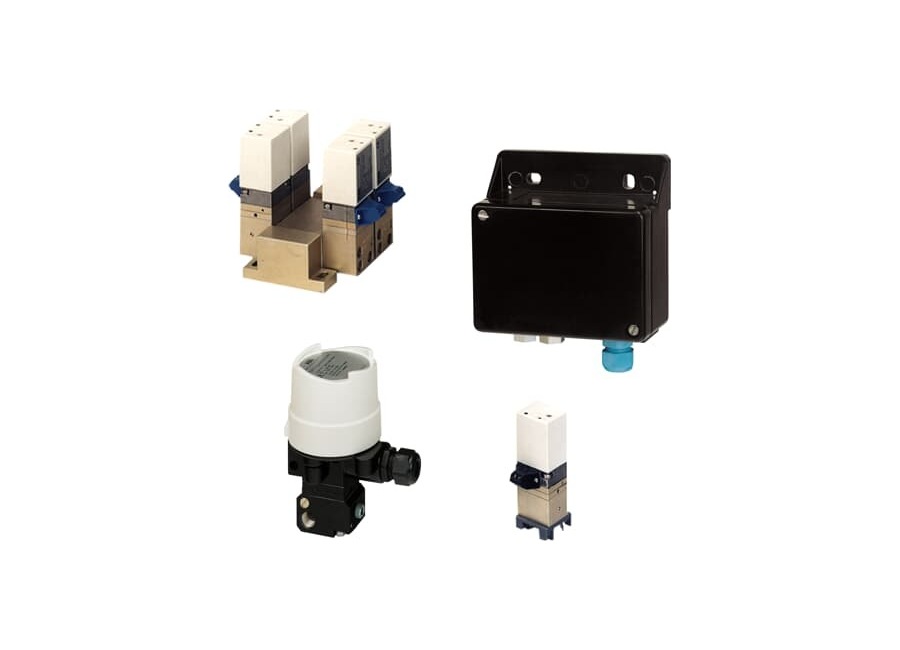
TEIP11 · V18312H
Standard signal converter with control-room and field versions. Typically converts 4–20 mA to 0.2–1 bar / 3–15 psi. Direct or reverse action and different supply pressures are available.
An I/P converter is a simple solution for converting 4–20 mA into a standard pneumatic signal without closed-loop valve-position control.
Standard signal converter with control-room and field versions. Typically converts 4–20 mA to 0.2–1 bar / 3–15 psi. Direct or reverse action and different supply pressures are available.
Includes a pneumatic power stage for loads or actuators requiring greater pneumatic capacity.
| Function | I/P converter | Positioner |
|---|---|---|
| Converts 4–20 mA to pressure | Yes | Yes, internally |
| Reads actual valve position | No | Yes |
| Compensates for friction / process forces | No | Yes |
| Diagnostics / HART | Usually not | Yes, on digital versions |
| Simplicity / pneumatic retrofit | A strong fit | More complex |
The output signal alone is not enough: supply pressure must match the specified code and configuration.
Filter and dry the air to protect nozzles and restrictions and maintain signal stability.
Check signal direction before connecting to a valve or conventional positioner.
IP20, aluminium or stainless steel field enclosures and Ex versions have different limits and certifications.
A leak between the I/P and actuator changes actual pressure and dynamic response.
An I/P converter does not know whether the valve has reached the requested position.
Download the documents for your model. Shared manuals, protocols and versions are identified in each document card.
Converter without power stage. Shared TEIP11 / TEIP11-PS manual.
Converter with power stage. Select the relevant section of the shared manual.
No. TEIP11 V18312H has no power stage; TEIP11-PS V18311H integrates a pneumatic power stage and can drive loads requiring greater air flow directly.
Typically 4–20 mA or 0–20 mA to 0.2–1 bar / 3–15 psi, with other options depending on configuration.
An I/P is sufficient for a proportional pneumatic signal. For actual valve-position control against friction, process forces and hysteresis, use a positioner.
Yes. TEIP11/TEIP11-PS includes intrinsically safe and flameproof configurations depending on enclosure and code.
It can be mounted in a control room, on rails or blocks, or directly in the field in aluminium or stainless steel enclosures, including Ex versions.
Current input, pneumatic output, supply pressure, direct/reverse action, tubing tightness and air filtration.