
Is AZ25 always better than AZ20?
No. They address different conditions. The temperature range and probe construction must match the application.
Oxygen measurement for combustion control. We assess temperature, atmosphere, installation and the need to measure residual combustibles.
| Model | Measurement / construction | Application to assess | Reference |
|---|---|---|---|
| AZ20 | O₂ · in-situ zirconia | Combustion control; process temperatures up to 800 °C | AZ20 |
| AZ25 | O₂ · high-temperature zirconia | Applications above 600 °C, up to 1400 °C depending on version | AZ25 |
| AZ30 | O₂ · flameproof system | Hazardous areas; process temperatures up to 700 °C | AZ30 |
| AZ40 | O₂ or O₂ + CO equivalent; close-coupled sampling | Control of excess oxygen and unburnt combustibles | AZ40 |
| AZ10 | O₂ · close-coupled sensor with sample guide tube | Small boilers and marine applications; process temperatures up to 800 °C | AZ10 |
These limits guide initial selection. Check length, sheath, mounting and permitted conditions against the datasheet for the selected configuration.
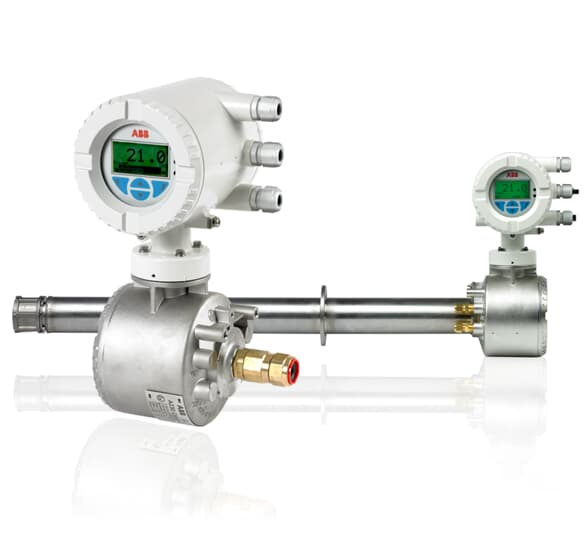
Probe with a zirconia cell at the tip inserted into the duct. ABB specifies process temperatures up to 800 °C and lengths up to 4 m. The range includes diagnostics, HART communication and automatic calibration options.
A useful starting point for in-situ combustion measurement where temperature, materials and gas conditions are compatible.
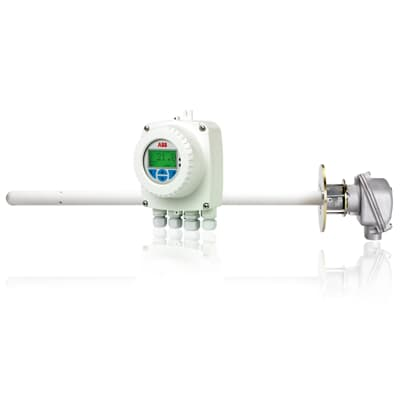
For furnaces and processes above 600 °C, ABB offers AZ25 versions up to 1400 °C, with protective sheaths selected for the application. Specified lengths reach 1250 mm.
Selection also depends on furnace atmosphere and sheath resistance: replacing AZ20 with a probe that has a higher temperature rating is not sufficient by itself.
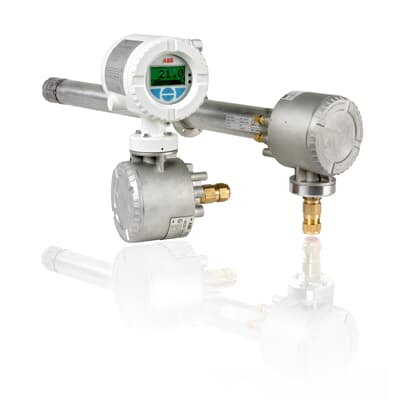
AZ30 is the flameproof combustion measurement system in the range. ABB specifies ATEX/IECEx certification, process temperatures up to 700 °C and lengths up to 2 m.
Check the full marking, external environment and permitted process conditions. Certification does not remove the need to assess the gas reaching the cell.
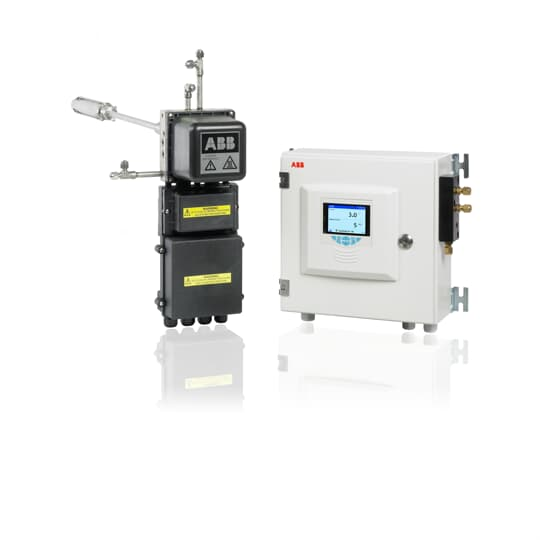
AZ40 combines zirconia oxygen measurement with combustibles measurement expressed as CO equivalent, depending on configuration. It uses close-coupled sampling with a heated path; filtration and blowback-cleaning options are available.
COe is not a selective measurement of CO alone. The value is used to assess residual combustibles and must be interpreted according to the analyser’s principle and calibration.
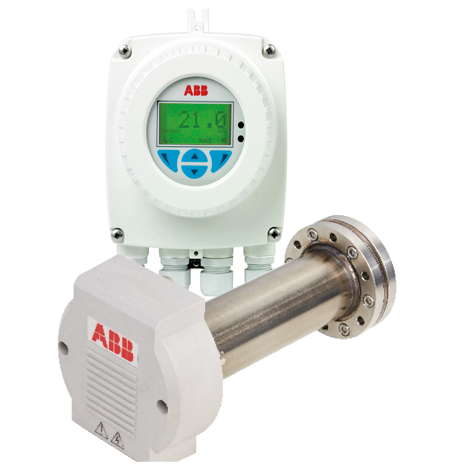
ABB datasheet revision E describes AZ10 for small industrial boilers and marine applications. The system includes a remote transmitter and a zirconia sensor outside the duct, supplied through a sample guide tube; direct installations are provided for small ducts.
Process temperatures up to 800 °C, with a 400 °C limit at the mounting flange. Reference air reaches the sensor by diffusion, without a dedicated external compressed-air line.
For replacement, provide the nameplate, mounting details and application conditions. For marine use, check the certification required by the project for the proposed configuration.
A combustion probe is not automatically suitable for nitrogen purity or trace oxygen. The range and sample matrix require a dedicated selection.
To select an Endura oxygen analyser, send us the following information, even if preliminary:
No. They address different conditions. The temperature range and probe construction must match the application.
No. Combustibles measurement is expressed as CO equivalent. It must not be presented as a selective measurement of carbon monoxide alone.
Check sampling location, wet or dry basis, air ingress and delays. Comparison requires equivalent conditions.